Tile on slab foundations can last for decades in Dallas homes, but only when the installation is planned for the way North Texas clay soil moves. Most cracked tile over a slab comes from a crack in the concrete that wasn’t isolated, missing movement joints, or a foundation that’s still shifting. Good prep, a crack isolation membrane where needed and properly placed soft joints go a long way toward preventing cracks.
If you’re planning new floors in a Dallas-area home built on a slab, here’s what causes tile cracks, what an installer should check before laying tile, and how to tell when a foundation issue needs attention first.
Key Takeaways
- Expansive clay soil shrinks when dry and swells when wet, which can move slab foundations.
- Hairline shrinkage cracks in a slab are common; they should be isolated with a crack isolation membrane before tiling.
- Cracks with a height difference from one side to the other point to structural movement, and a membrane alone won’t protect the tile.
- Movement joints at the perimeter and across large floors give tile room to expand and contract.
Why Do Slab Foundations Move in Dallas?
Much of the Dallas area sits on clay soil that changes volume with moisture. The Texas Department of Licensing and Regulation calls expansive soils, which shrink and swell as moisture changes, “a very common cause of foundation problems” (TDLR Technical Bulletin).
Texas A&M AgriLife Extension explains that when clay soil becomes very dry, it shrinks and the foundation can sink, sometimes in different directions, causing cracks. When the soil gets moisture again, it expands and can lift the foundation (AgriLife Extension). Hot, dry summers followed by heavy rain make that cycle familiar to many Dallas homeowners.
Tile is rigid. When the slab under it moves, the tile and grout can crack along the same line.
What Kinds of Slab Cracks Matter for Tile?
Not every crack in a concrete slab is a problem, but every crack should be looked at before tile goes down. The Ceramic Tile and Stone Consultants describe two main types (CTaSC):
- Shrinkage cracks. Thin cracks that form as concrete cures. They move side to side over time and should be covered with a crack isolation membrane so they don’t telegraph up through the tile.
- Structural cracks. Cracks where one side sits higher than the other. CTaSC notes that a crack isolation membrane won’t protect tile over this kind of crack; the slab needs repair first.
A slab that’s older isn’t automatically done moving. In clay soil, seasonal moisture swings can keep shifting a foundation for years.
How Do Installers Protect Tile on Slab Foundations?
Careful prep matters more than the tile itself. A solid tile installation over a Dallas slab usually includes:
- Inspecting the slab. Old flooring and adhesive come up, and the installer maps every crack and checks for height differences.
- Checking flatness. High and low spots are ground down or filled, especially for large-format tile.
- Isolating cracks. A crack isolation membrane goes over shrinkage cracks, and full-coverage membranes are an option for slabs with many cracks.
- Getting full mortar coverage. Tiles are fully bedded so there are no hollow spots that can crack under load.
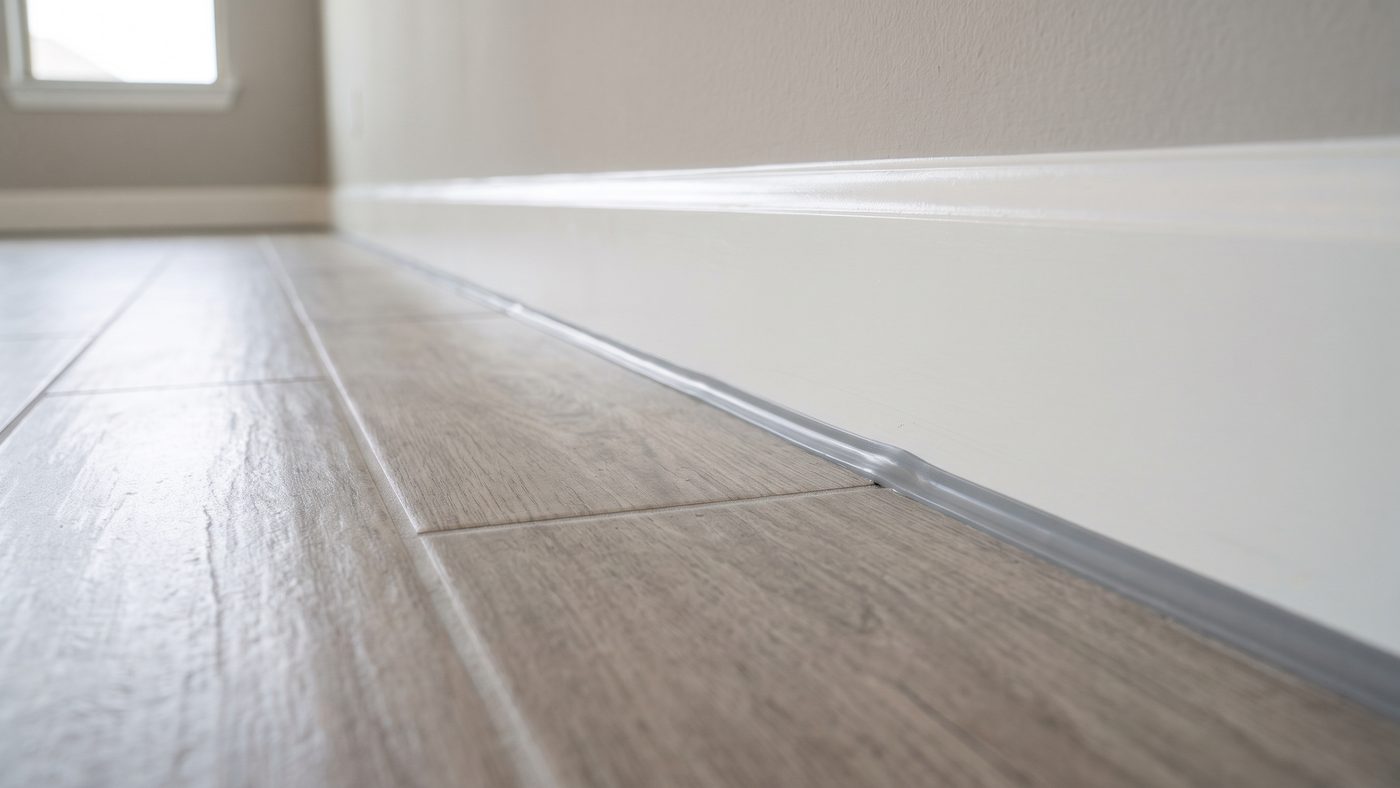
- Placing movement joints. Soft joints go along walls and across large rooms.
Why Are Movement Joints So Important?
Tile, grout and concrete all expand and contract slightly with temperature and moisture. Without room to move, stress builds until something cracks or tiles tent upward. CTaSC explains that industry guidance calls for movement joints at the perimeter, at changes of plane and where tile meets restraining surfaces, plus joints across the field of large floors (CTaSC movement joints).
Those joints are filled with a flexible sealant instead of grout. CTaSC notes that spacing is closer in areas exposed to direct sunlight, such as rooms with large windows, which is common in Texas homes.
Which Signs Point to a Foundation Problem First?
Tile can’t solve a foundation that’s actively moving. Talk with a foundation professional before installing tile if you notice:
- Slab cracks where one side is higher than the other
- Doors that stick or won’t latch, or gaps above door frames
- Cracks in drywall that keep coming back, often at the corners of doors and windows
- Gaps between the soil and the foundation around the outside of the house
- Older tile cracking along a long, continuous line
Once a foundation issue is handled, the tile installation can be planned with that history in mind.
Can watering help protect a slab?
AgriLife Extension suggests watering soil around the foundation during dry periods when you see a gap between the soil and the slab, using a soaker hose placed about 8 to 18 inches from the foundation. Consistent soil moisture helps limit the shrink-swell cycle.
Which Tile Choices Work Best on a Moving Slab?
Porcelain and ceramic tiles both work well on slabs when installed correctly. Very large tiles need an especially flat floor and good coverage, so they can be less forgiving on slabs with a history of movement. Smaller formats and patterns with more grout lines may handle minor movement better. Natural stone can be beautiful, but some stones are more brittle, so membranes and joints matter even more.
How Dallas Tile Installers Can Help
Dallas Tile Installers works with homeowners across Dallas and nearby communities on floor, bathroom and kitchen tile projects. Our team can inspect your slab, talk through crack isolation and movement joints, and help you choose tile that suits your home. See our full list of tile installation services.
Frequently Asked Questions
Can you put tile directly on a concrete slab?
Yes, tile can be bonded directly to a clean, flat, sound slab. Shrinkage cracks should be covered with a crack isolation membrane first, and movement joints should be planned for the room.
Will a crack isolation membrane stop all tile cracks?
No. Membranes help with side-to-side movement from shrinkage cracks. They won’t protect tile over structural cracks where the slab has shifted up or down.
Why is my new tile cracking along a straight line?
A straight crack running through several tiles often follows a crack or control joint in the slab underneath. A tile professional can check whether the crack was isolated and whether movement joints were included.
Should I fix my foundation before installing tile?
If there are signs of active movement, like sticking doors or slab cracks with height differences, have a foundation professional evaluate it before installing new tile.
Planning tile over a slab in your Dallas home? Call Dallas Tile Installers at (469) 378-5894 or reach out online to talk through your project.